
What's Actually Included in MVP Development Services?
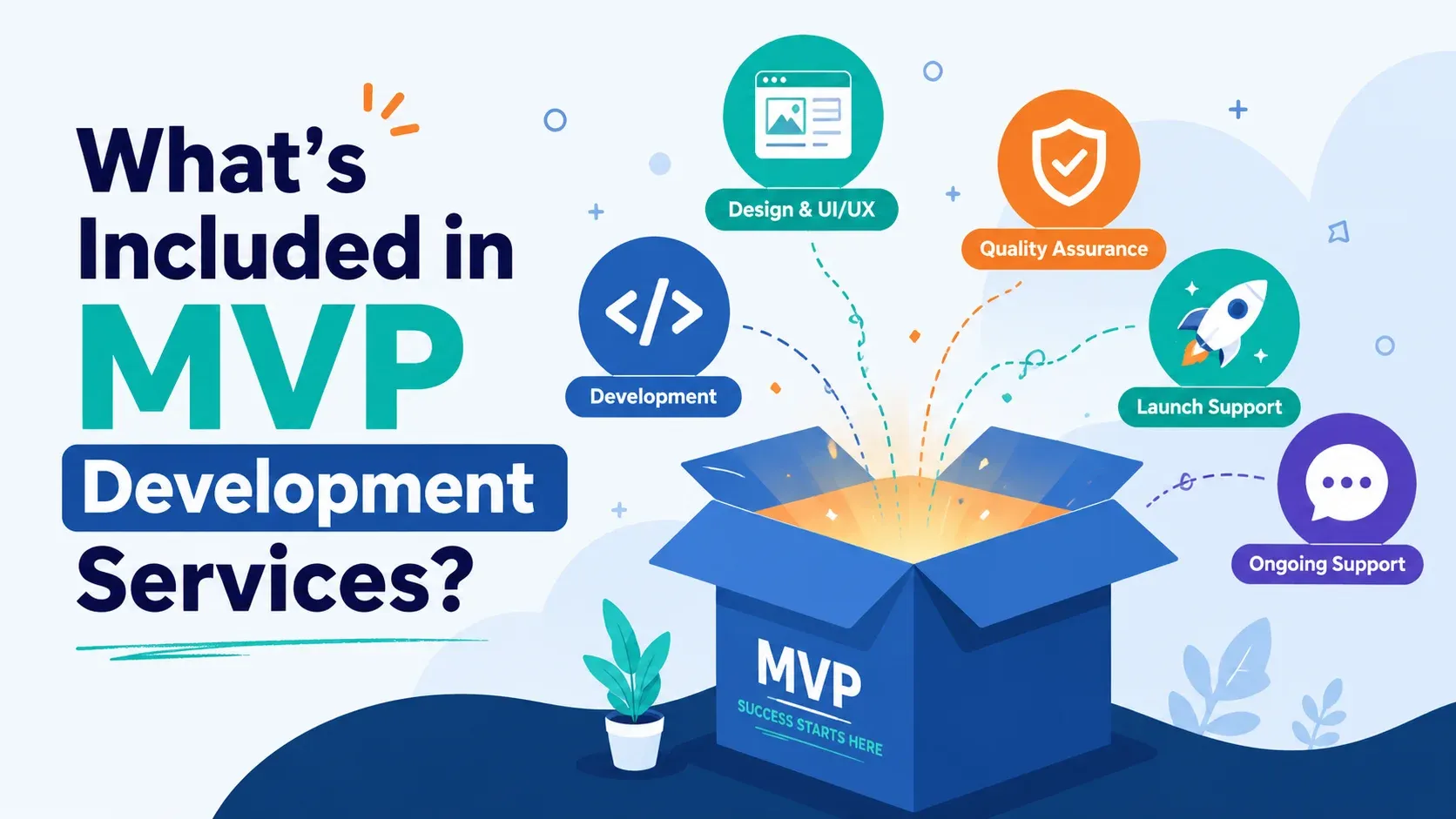
“MVP development services” means different things to different providers. Some quotes cover strategy, design, and engineering end to end. Others cover engineering only, and quietly assume you’ll bring your own designs and a fully scoped requirements document. If you’re comparing proposals without knowing which is which, you’re not comparing apples to apples — you’re comparing very different scopes of work with similar-looking price tags.
Here’s what a complete MVP development service should actually cover, stage by stage.
Product Strategy and Scoping
Before any design or code, this stage turns a rough idea into a defined, buildable scope. It typically includes:
- Clarifying the target customer and core problem
- Defining the single assumption the MVP needs to test
- Separating must-have features from later-stage additions
- Identifying any technical risks that need resolving early
A provider who skips straight to a feature list without this stage is often optimizing for a faster sale, not a better product. Scoping is where the most expensive mistakes — building the wrong thing well — get prevented. Run your own version of this stage against the MVP Development Checklist before you even talk to a provider.
UX/UI Design
Design translates the scoped journey into an interface real users can navigate. For an MVP, this doesn’t need to be an elaborate design system, but it should include:
- Wireframes or flows for every screen in the core journey
- A coherent visual direction, even if simple
- Consideration of empty states, errors, and edge cases
Some MVP development services bundle design in; others treat it as a separate line item or expect the client to supply it. Ask explicitly — a proposal that looks cheaper because design is excluded can end up costing more once you source it separately and coordinate two vendors instead of one.
Engineering
This is the stage most people picture when they hear “MVP development,” but engineering quality depends heavily on decisions made upstream. A solid engineering scope covers:
- Frontend and backend development for the defined core journey
- Data modeling appropriate to the product, not over-engineered for scale you don’t have yet
- Integrations explicitly listed in scope (payments, third-party APIs, authentication providers)
- Security and data-handling practices suitable for real users, not just a demo
| Service component | What it should deliver |
|---|---|
| Frontend development | A working interface for the full core journey |
| Backend development | Reliable data handling and business logic |
| Integrations | Only what’s explicitly scoped — payments, auth, APIs |
| Security basics | Safe handling of user data, appropriate for real usage |
Quality Assurance
QA for an MVP isn’t about achieving zero bugs everywhere — it’s about making sure the core journey is reliable. This stage should include functional testing of the primary flow, basic cross-device and cross-browser checks for web products, and a documented list of known limitations rather than surprises after launch.
Deployment and Launch
Getting the product live involves more than pushing code. A complete service includes setting up hosting and environments, configuring analytics on the core journey, and preparing the product for real traffic — not just a staging demo.
Post-Launch Support
This is one of the most inconsistent parts of MVP development services across providers. Some engagements end the moment the product goes live. Others include a defined support window for bug fixes and small adjustments as real users start interacting with the product.
Neither approach is wrong, but it needs to be explicit in the proposal. A founder expecting a support window who doesn’t get one — or a provider expecting to be paid separately for work the founder assumed was included — is a common and avoidable source of friction.
What’s Often Excluded (and Should Be)
Full-service MVP development doesn’t usually include long-term product management, extensive marketing, or scaling infrastructure for growth you haven’t validated yet. That’s appropriate — an MVP proposal padded with services you don’t need yet is a sign of scope inflation, not thoroughness. For a rough sense of what a properly scoped engagement should cost, see How Much Does MVP Development Cost in 2026?
Red Flags in an MVP Development Proposal
A few patterns are worth watching for when you’re reviewing quotes:
- A single line-item price with no stage breakdown. If you can’t tell how much of the budget covers strategy versus engineering versus support, you can’t meaningfully compare it to another proposal.
- No mention of who owns the code after delivery. This should be explicit and in writing, not assumed.
- A scope that agrees to everything you ask for. A provider who never pushes back on scope is often optimizing for a signed contract over a focused, buildable MVP — and that tends to show up later as cost or timeline overruns.
- No described communication cadence. If the proposal doesn’t say how or how often you’ll see progress, ask directly before signing — “we’ll show you at the end” is a red flag for an MVP-length engagement.
- Silence on post-launch support. Whether or not it’s included, it should be addressed explicitly rather than left for you to discover after launch.
Why Scope Clarity Protects Both Sides
Vague scope doesn’t just risk the founder — it creates friction for the provider too. When “MVP development services” isn’t broken into clear stages, disagreements tend to surface mid-project: a founder expecting design revisions that were never scoped, or a provider being asked to absorb “small” additions that were never priced. Defining scope explicitly at the proposal stage, stage by stage, protects the relationship as much as it protects the budget.
This is also why a proposal worth trusting usually invites questions rather than discouraging them. A provider confident in their scope will walk you through exactly what’s included, what triggers additional cost, and what happens if requirements shift once development is underway — because that clarity works in their favor as much as yours.
Reading a Proposal With This in Mind
When you receive an MVP development proposal, map it against these stages explicitly: strategy, design, engineering, QA, deployment, and support. A proposal that’s vague about which of these are included — or that bundles everything into a single line item without breakdown — is harder to evaluate and harder to hold accountable later. If you’re still deciding whether a provider like this is even the right route, In-House Team vs MVP Agency vs Freelancers covers that decision directly.
Want a Clear, Full-Scope MVP Proposal?
MVPHUB delivers strategy, design, engineering, QA, and launch support as one accountable service — using AI-accelerated delivery and professional engineering. Book a free consultation to see exactly what's included for your product.
Book a free consultation with MVPHUBFrequently Asked Questions
What is typically included in MVP development services?
Most complete MVP development services include product strategy and scoping, UX/UI design, engineering, quality assurance, deployment, and some form of post-launch support. Some providers also include validation research before development begins.
Does MVP development include design, or is that separate?
It depends on the provider. Full-service MVP development includes design as part of the engagement. Some development-only providers expect you to bring your own designs, which can create gaps if design and engineering aren't tightly coordinated.
Is post-launch support usually included in MVP development services?
Not always. Some providers end the engagement at launch, while others include a support window for bug fixes and minor adjustments. This should be clarified in the proposal before you sign, not assumed.
Should MVP development services include validation or research?
Not every provider includes this, but it's valuable when available. Providers who validate the core assumption alongside scoping help ensure the resulting product isn't just well-built, but built to test the right thing.
How do I compare MVP development service proposals fairly?
Compare them by scope, not just price. Confirm what stages are included (strategy, design, engineering, QA, deployment, support), what's excluded, who owns the code, and what the communication process looks like during the build.
